Vending Machine Supplier Types: Pick the Mix With the Lowest Delivered Cost, Not the Cheapest Case Price
Choose a vending machine supplier by three things: delivered cost per item, an order minimum you can sell through before stock dates out, and a catalog that matches what sells at your locations. Most operators buy from a mix: one main source for core items, plus one or two others to fill gaps. This guide is for operators stocking their first machines and for routes that have outgrown the weekly warehouse club run.
By Mike Hoffmann, Founder · 7 min read
Browse the Pantry catalog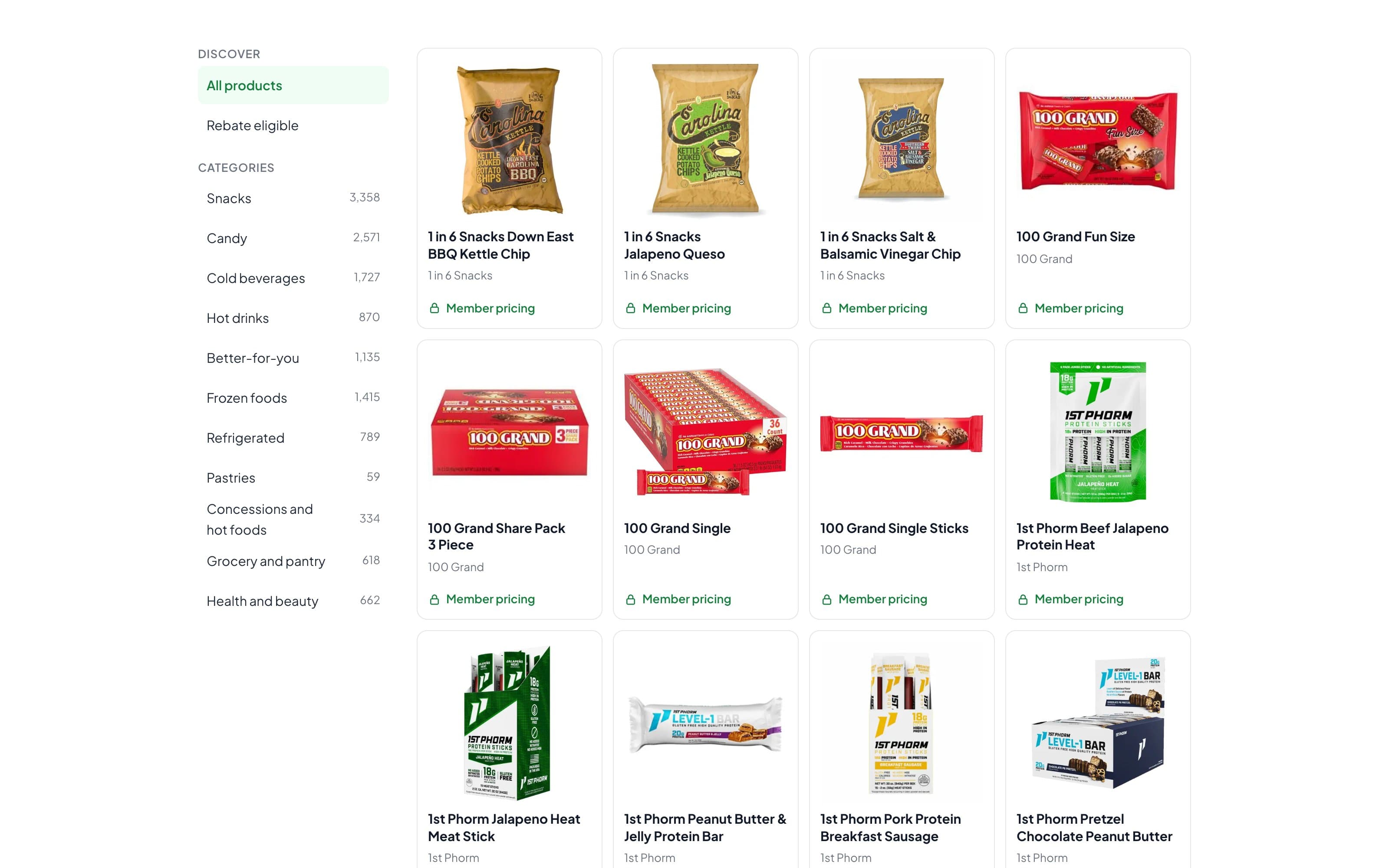
On this page (6 sections)
Vending supplier chart: from supplier type to best use
| Supplier type | Best for | What to check |
|---|---|---|
| National broadline distributors | Routes ordering steady volume | Minimums, delivery area |
| Regional vending distributors | Vending-specific case packs | Coverage, local selection |
| Warehouse clubs and cash-and-carry | New and small routes | Your drive time, pack sizes |
| Beverage distributors and bottlers | Drink machines and coolers | Brand rules, delivery days |
| Direct from manufacturers | High-volume core items | Minimums, account approval |
| Healthy and specialty snack suppliers | Offices, gyms, schools | Shelf life, sell-through |
| Fresh food commissaries | Micro markets, smart coolers | Delivery timing, waste |
| Online wholesale marketplaces | Filling catalog gaps | Shipping cost per case |
| Supplier aggregators | Buying from several suppliers at once | Which suppliers are included |
| Machine makers | Buying the equipment itself | Specs, warranty, capacity |
Which vending machine supplier should you pick?
- Just starting with a few machines: a warehouse club or a supplier aggregator, so you skip large minimums.
- Running drink machines or coolers: a beverage distributor or local bottler for your core brands.
- Placing in offices and gyms: add a healthy and specialty snack supplier next to your main source.
- Growing past a handful of locations: price a regional vending distributor against your current mix on delivered cost.
- Running micro markets or smart coolers with fresh food: a commissary whose delivery days match your service days.
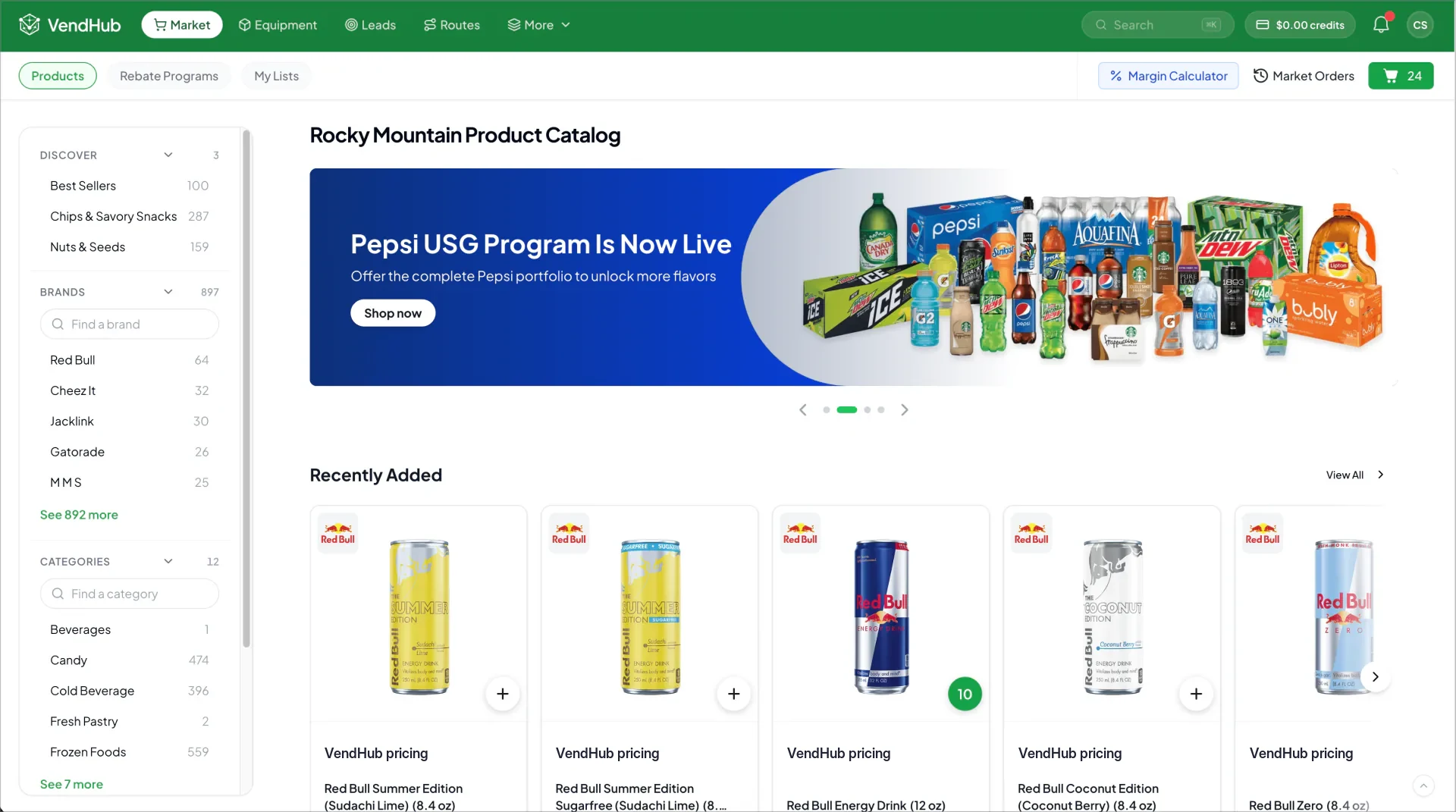
Which wholesale suppliers and distributors do operators buy from?
National broadline distributors
Broadline distributors carry a wide catalog: snacks, candy, drinks, and often paper and cleaning goods. Once your route orders enough each week to meet their minimum, one truck can cover most of what you stock.
The catch is the minimum order and the delivery area. A low-volume route may not qualify, or may end up holding more product than its machines can sell before it dates out. Run every quote through the wholesale delivered-cost checker before you sign up.
Best for: established routes, steady weekly volume, operators who want one main truck
Regional vending distributors
Regional distributors focus on vending and office refreshment, so their catalog and case packs are often built for machines. They tend to know what sells in local placements and can be more flexible with smaller operators than the national houses.
Coverage is the limit. A regional house may not reach every stop on your route, and selection varies a lot between them. Check their item list against your planogram, and look up products in the vending UPC database so you compare the exact same item across suppliers.
Best for: vending-specific packs, local service, mid-size routes
Warehouse clubs and cash-and-carry
Warehouse clubs and cash-and-carry stores have no order minimum, and you leave with stock the same day. That makes them the default starting point for new operators with only a few machines.
The hidden cost is your time and fuel. Every trip is an hour or more you are not servicing machines, and retail pack sizes don't always fit vending spirals. The location profit calculator shows how much your restocking time weighs on each location.
Best for: new routes, small orders, filling a gap fast
Beverage distributors and bottlers
Beverage distributors and local bottlers deliver drinks by the case, often on a set route schedule. For drink machines and coolers, that usually beats hauling heavy cases out of a store yourself.
Some bottlers set rules on which brands go in which machine, and their delivery days may not line up with your service days. Ask about minimums and brand requirements before the first order. If the drinks are going into a cooler, the smart cooler cost comparison shows what that cooler costs to own over one to five years.
Best for: drink machines, smart coolers, routes with heavy beverage sales
Direct from manufacturers
Some snack and candy brands sell straight to operators or through brokers. Buying direct can make sense for the handful of items that sell at every location, since you cut out a layer between you and the brand.
Most brands set high minimums and require an approved account, so this rarely works for a new route. Even when you qualify, you still need other suppliers for everything else. Pick candidates from your proven sellers (what to stock and when to cut it), then compare the direct quote against your current source on a delivered basis.
Best for: core best-sellers, larger routes, operators with storage space
Healthy and specialty snack suppliers
Specialty suppliers carry better-for-you snacks, protein items and products for dietary needs that broadline catalogs often skip. Offices, gyms and schools ask for these, and carrying them helps you win and keep those placements.
Watch shelf life and sell-through. Specialty items can date out faster and move slower at some sites, so start with a small assortment and track what sells. The unattended retail guide covers how product mix shifts between vending machines, micro markets and smart coolers.
Best for: office placements, gyms, schools, wellness-focused clients
Fresh food commissaries
Commissaries make sandwiches, salads and meals for micro markets and refrigerated machines. They let you sell fresh food without running a kitchen.
Fresh food depends on timing. Delivery has to match your service schedule, and anything unsold turns into waste fast. VendLytics tracks sales and revenue for every connected machine in one place, so you can see sell-through by site and cut what keeps coming back unsold.
Best for: micro markets, smart coolers, workplaces with lunch traffic
Online wholesale marketplaces
Online wholesale sellers ship cases to your door. That helps when no local source carries an item your locations keep asking for, and for occasional restocks of niche products.
Shipping is where online buying usually breaks down. A good case price can lose its edge once freight is added, especially on heavy items like drinks. Put the full delivered number into the wholesale delivered-cost checker for an honest comparison.
Best for: hard-to-find items, gap filling, light products
Supplier aggregators
An aggregator puts several wholesale suppliers behind one account, so you shop and check out in a single cart. You stop juggling separate logins, orders and delivery windows.
VendHub's Pantry catalog brings national wholesale suppliers under one login and one cart. Check which suppliers are included before you count on it for your full assortment. VendHub members also get discounted member pricing on supplies and equipment, which adds up over months of reorders.
Best for: small and growing routes, operators tired of multiple accounts, one-cart ordering
Machine makers
When people search for a supplier, they sometimes mean the equipment itself. Machine makers and their resellers sell the vending machines and smart coolers your stock goes into.
Compare specs, capacity and warranty first, because the machine decides what products you can carry. VendHub's Equipment catalog shows a price on every machine and sells new machines only, never used or refurbished. Members can also apply for in-platform equipment financing through VendHub's partner APPROVE.
Best for: new routes, adding capacity, replacing older machines
What should you check before you buy?
- Compare on delivered cost. Add freight, fees and your own pickup time to every quote, then divide by the number of units.
- Match minimums to your volume. Commit only to a minimum order you can sell through before products date out.
- Check the catalog against your planogram. Confirm by UPC that the supplier carries the items that actually sell at your locations.
- Keep a backup source. Distributors run out of stock, so know where you'll fill a gap before a machine sits half empty.
- Re-run the numbers as you grow. The supplier that fits a few machines may not fit a larger route, so compare again when volume changes. If you're buying several machines or reordering often, check what membership saves you over time.
Your move this week
- Pull your last month of orders and list your 10 best-selling items by UPC, using the vending UPC database to confirm each one.
- Get quotes on those 10 items from at least two supplier types in the chart above, including one you don't buy from today.
- Enter every quote, with freight and your drive time, into the free wholesale delivered-cost checker and note the winner for each item.
- Pick a backup source for your three fastest movers so a stock-out never empties a machine.
- Price the same list in the Pantry catalog to see whether one cart could replace two or three accounts.
Frequently asked questions
What is the best place to buy stock for a new vending route?
Most new operators start with a warehouse club or a supplier aggregator, because neither asks for a large minimum order. Once your weekly volume is predictable, compare regional and national distributors on delivered cost. The right source keeps your machines full without leaving you holding product that dates out before it sells.
How do I compare wholesale quotes fairly?
Compare delivered cost per item, not case price. Add shipping, handling fees and the time and fuel you spend picking up orders, then divide by the units in the case. The free wholesale delivered-cost checker does this math, so you can see which supplier is actually cheaper for your route.
Should I buy from more than one supplier?
Most operators do. One supplier rarely carries every product your locations want at the best delivered cost, and a second source protects you when an item goes out of stock. An aggregator that puts several suppliers in one cart cuts down the work of managing separate accounts, logins and orders.
How do I know which products to order?
Order from what actually sells at each location. If your machines are connected, sales data shows sell-through by item, so you can cut slow movers and reorder best-sellers. Matching products by UPC also lets you compare the same item across suppliers instead of guessing between listings that look alike but differ.
Does VendHub sell used machines or lend money for equipment?
No to both. VendHub sells new machines only, never used or refurbished, and does not lend directly. Members can apply for in-platform equipment financing through VendHub's partner APPROVE. Every machine in the Equipment catalog shows its price, and membership details are on the Pricing page.
Keep reading
 Can Vending Machine Screens Make Money From Ads? Yes, If You Control What Plays and Can Wait for the Payout
 Vending Machine Apps: Start With the Job That Eats Your Week, Then Add the Next Tool
 Vending Machine Telemetry: Check the Connection Before You Buy, Then Track Only What Changes Your Route
 Vending Repair: Fix the Payment and Delivery Parts Yourself, Call a Tech for Cold and Power