Unattended retail
Unattended retail is selling products with no cashier on site. Customers choose and pay on their own through a vending machine, smart cooler, micro market or kiosk, while the operator restocks and manages each location between visits.
The four main formats
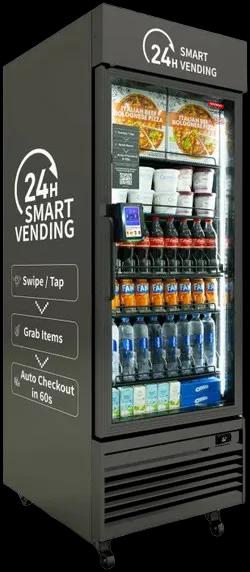
Vending machines
The customer picks an item, pays by card, phone or cash, and the machine drops it. Stock stays locked inside, so they suit public spaces and places with little oversight.
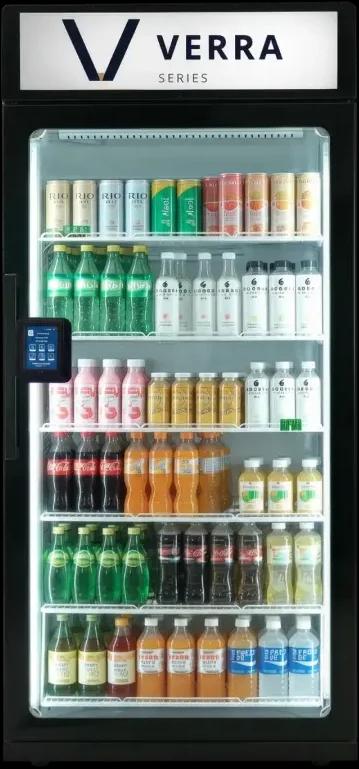
Smart coolers
The customer taps a card to unlock the door, takes what they want and closes it. Cameras or sensors work out what left the shelf, and the card is charged for it.
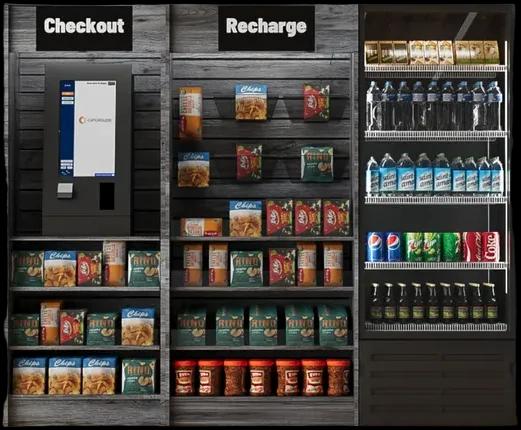
Micro markets
Open shelves and coolers with a self-checkout kiosk. Customers scan and pay on their own. They work best where the same people come back every day, like a large break room.
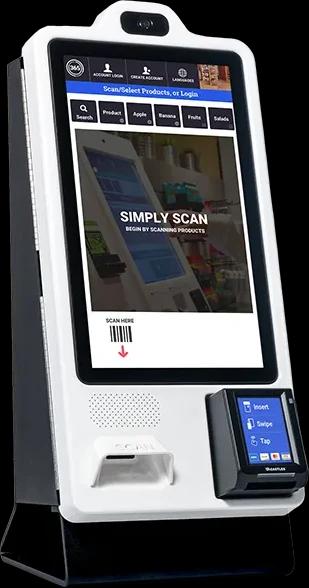
Self-service kiosks
The payment screen on its own, or a kiosk that sells a focused range. Often the checkout point for a micro market or a staffed shop that wants a self-serve option after hours.
What it takes to run an unattended location
A location
Foot traffic matters, but regular traffic matters more: people who are on site for hours with few food options nearby.
Find locations by ZIPThe right equipment
Match the format to the site. An unsupervised lobby calls for a locked machine; a staffed workplace can take a cooler or a market.
Compare equipmentStock
Unattended sites run on restocking. Order what sells at each location, and plan for what expires.
Browse snacks and drinksSales data
With nobody on site, sales data is how you see the location. It tells you what to bring, when to go and which sites to replace.
See VendLytics
How to choose a format
- Who is on site? The same people every day can support open shelves. The general public usually calls for locked stock.
- What do they want to buy? Fresh food and larger items suit coolers and markets. Snacks and drinks work in every format.
- How much space and power is there? Measure first. Coolers and machines need power and clearance, and a market needs floor space.
- Does it have a connection? Card payments and remote sales data depend on one. Check the signal where the unit will stand.
Compare costs with the smart cooler cost comparison and model a site with the location profit calculator.
Frequently asked questions
What is unattended retail?
Unattended retail is selling products with no cashier or clerk on site. Customers choose and pay on their own through a vending machine, smart cooler, micro market or kiosk, and the operator restocks and manages the location remotely between visits.
Is a vending machine unattended retail?
Yes. Vending is the original form of unattended retail. The term also covers newer formats such as smart coolers and micro markets, which let customers handle the product before they pay.
What is the difference between a vending machine and a kiosk?
A vending machine holds the product and dispenses it after payment. A kiosk is mainly a screen for ordering or paying, and the product is often on an open shelf or handed over separately.
What is a micro market?
A micro market is a small self-serve shop, with open shelves, coolers and a self-checkout kiosk. It usually sits in a closed space such as a workplace, where the same people use it every day.
How do you prevent theft in unattended retail?
Match the format to the location. Locked vending machines suit public spaces. Open formats fit where the same people come back daily. Cameras, card-only access and comparing sales against stock counts help you catch losses early.
What technology does unattended retail need?
At minimum a payment device and a connection. Most operators add telemetry to see sales and stock remotely, plus software for planning routes and orders. Smart coolers also use cameras or weight sensors to track what was taken.
The hub for vending operators
VendHub brings locations, equipment, stock and sales for unattended retail operators into one account.