Types of Vending Machines: Pick by What the Spot Can Sell and How Much You Can Trust the Crowd
The main types of vending machines are spiral snack, drink and combo machines, AI smart coolers, lock-and-tap coolers, smart freezers, smart ambient cabinets, micro market kiosks, coffee brewers, and specialty machines for vapes and trading cards. Three things separate them: what the machine keeps (ambient, chilled or frozen), how the customer pays, and how the machine knows what left the shelf. This breakdown is for operators picking a first machine or adding a new format to a route.
By Mike Hoffmann, Founder · 8 min read
Browse the machine catalog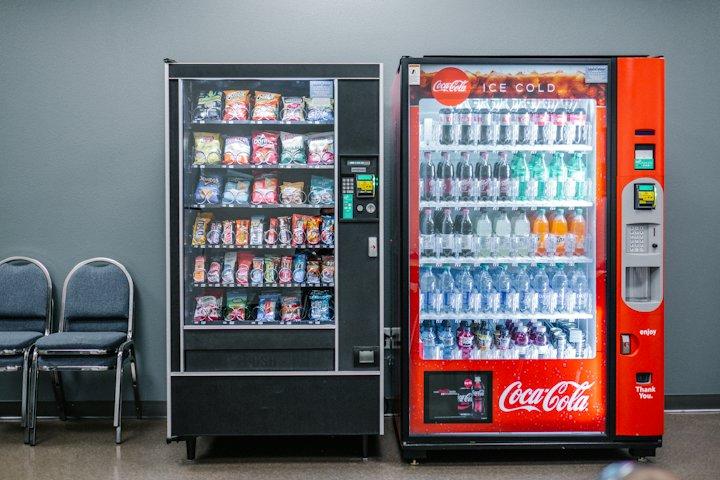
On this page (6 sections)
Vending machine types chart: from spirals to smart coolers
| Type | Holds | How the customer pays | How it tracks the sale |
|---|---|---|---|
| Snack, drink and combo machines | Shelf-stable snacks and drinks | Select and pay at the machine | Spirals and motors drop the item |
| AI smart coolers | Bottles, cans, fresh food, multi-packs | Tap a card or phone, take, charged when the door closes | Cameras and AI |
| Lock-and-tap coolers | Chilled items | Pay, then the door opens | A door lock and a payment step |
| Smart freezers | Ice cream, frozen meals, treats | Tap, take, charged on close | Same tap-and-take model as AI coolers |
| Smart ambient cabinets | Snacks, candy, household items | Tap, take, charged on close | Cameras and AI |
| Micro markets and self-checkout kiosks | Open shelves and coolers, hundreds of items | Scan and pay at a full kiosk | The customer scans each item |
| Grab-and-go kiosks | Items on a nearby shelf or cooler | Scan and pay at a small kiosk | The customer scans each item |
| Coffee brewers | Hot drinks | Per cup, at the machine | Brews each cup on order |
| Vape and trading card machines | Age-restricted items, card packs | Select, pay, the item drops | The machine dispenses the item |
Which types of vending machines should you pick?
- Small office or gym, first machine: an AI smart cooler, or a lock-and-tap cooler if the crowd is small and trusted.
- Break room that wants real food: a micro market with a self-checkout kiosk, a smart cooler and a freezer.
- Office that wants better coffee: a bean-to-cup or single-cup brewer.
- Bar, smoke shop or adult-only venue: a vape machine, after you check the rules for age-restricted sales.
- Game store, mall or arcade: a trading card machine.
Which snack, cooler, kiosk and specialty machines do operators run?
Snack, drink and combo machines
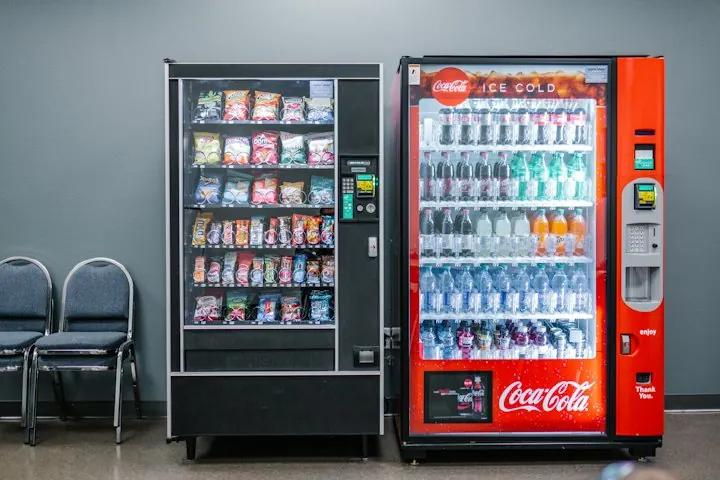
The spiral machine is the format most people picture. A customer picks a selection, pays, and a motor turns a spiral until the item drops. It sells shelf-stable items at fixed prices, and snack, drink and combo versions are still common on routes.
The limit is range. Spirals hold only items that fit a coil, so salads, sandwiches and multi-packs are hard to sell. If an older machine still runs but takes only cash, a cashless reader such as the 365 Payplus mounts over the existing bill acceptor and adds card and phone payments. Our post on choosing between snack, drink and combo machines covers how the location settles that choice.
Best for: shelf-stable menus, fixed-price drinks, older machines worth upgrading
AI smart coolers
AI smart coolers are the fastest-growing type in the VendHub catalog. The customer taps a card or phone, the door opens, they take what they want, and cameras and AI work out what left the shelf and charge the card when the door closes. With no spirals, a cooler sells almost anything that fits on a shelf: bottles, cans, sandwiches, salads and multi-packs.
Sizes vary widely. The HAHA US 360C Mini holds 245 bottles, and the dual-cabinet HAHA US1200 CT Ultra holds 864. VERRA by Sandstar runs from the entry-level Verra Core to the dual-door Verra Core Plus for high-traffic spots. Check payment before you order: most smart machines in the catalog are cashless.
Best for: offices, gyms, apartment lobbies
Lock-and-tap coolers
A lock-and-tap cooler is the simpler cousin of the AI cooler. The door opens after payment, and the machine relies on a lock and a payment step instead of cameras. These coolers cost less and suit a trusted location with a smaller crowd. Examples include the AVS CoolSmart Cooler with Health Lock and the Imbera VR27, which comes in a QR-code version and a point-of-sale version.
The tradeoff is trust. Without cameras, the machine doesn't know which items a customer took, so it fits rooms where the same people come back every day. Before you pick between this and a camera cooler, run the smart cooler cost comparison to see what a cooler costs to own over one to five years.
Best for: small offices, clinics, trusted break rooms
Smart freezers
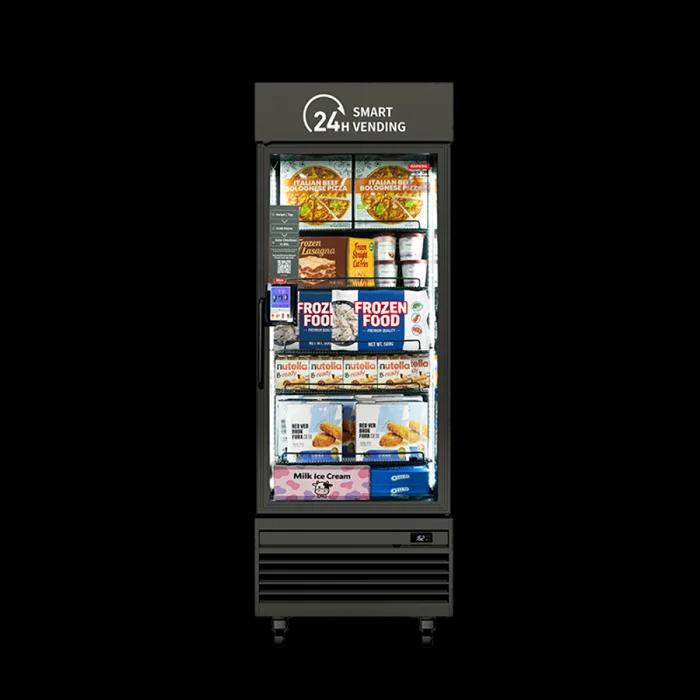
Smart freezers use the same tap-and-take model for frozen food: ice cream, frozen meals and treats. Frozen sells well where people live or work long hours and want something better than chips. The HAHA US 550 FT holds 486 bottles at freezer temperature.
The Verra Core Freeze combines freezer, cooler and ambient sections in one cabinet, and the AVS IceBlu Freezer covers the frozen side of a micro market. For made-to-order frozen treats, the 365 ColdSnap makes single servings on demand, which suits gyms, family venues and office perks.
Best for: apartments, hospitals, multi-shift workplaces
Smart ambient cabinets
Smart ambient cabinets use the same camera-and-AI checkout as smart coolers, without refrigeration. They hold snacks, candy and household items. The Micromart Smart Ambient and the 365 PicoAmbient Vision Standalone are two examples.
On its own, a cabinet sells only what keeps at room temperature. Placed next to a smart cooler, it gives one location a fuller menu without adding a second payment step for the customer to learn.
Best for: snack-heavy locations, spots beside a smart cooler
Micro markets and self-checkout kiosks
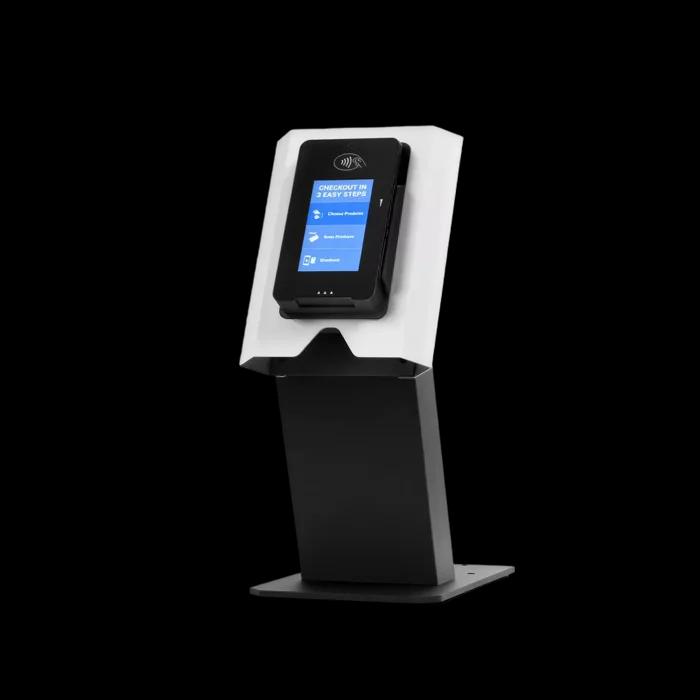
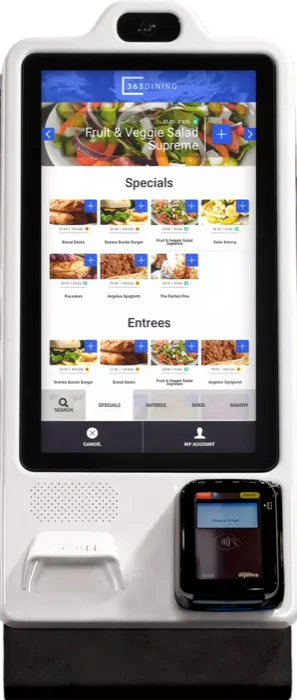
A self-checkout kiosk is the register for a micro market: open shelves, coolers and a screen where customers scan and pay. It lets one location carry hundreds of items instead of the few dozen a single machine holds. The 365 MM6 Mini fits smaller spaces, the full 365 MM6 handles busier markets, and the MM6+ Kiosk takes cash.
Bundles package the kiosk, shelving and coolers into one order. The 365 Starter Market is built for tight spaces, and the Small Market and Medium Market step up in size. Buying several pieces at once is where VendHub member pricing adds up, since members get discounted pricing on equipment and supplies.
Best for: large break rooms, manufacturing plants, corporate campuses
Grab-and-go kiosks
Grab-and-go kiosks are small payment stations for accounts too small for a full micro market. The customer picks items from a nearby shelf or cooler and pays at the kiosk. The 365 PicoMarket is the compact option.
A plain PicoMarket is cashless, so check how the location pays. The PicoMarket+ adds cash acceptance for crowds that still carry bills.
Best for: small offices, hotel lobbies, shared workspaces
Coffee brewers
Office coffee is its own category. Bean-to-cup machines grind fresh beans for every cup, and single-cup brewers make fast drip coffee from a plumbed water line. The Bodecker Barista brews a cup in about 32 seconds, the Bodecker DC Classic is built for all-day use, and the Kometa and Krea Touch add espresso drinks and touchscreens.
Check the water line and the cleaning schedule before you commit. A single-cup brewer needs plumbing, and every brewer needs regular cleaning on the visits you already make. Our post on picking a coffee vending machine walks through matching the brew to the crowd.
Best for: offices, dealerships, waiting rooms
Vape and trading card machines
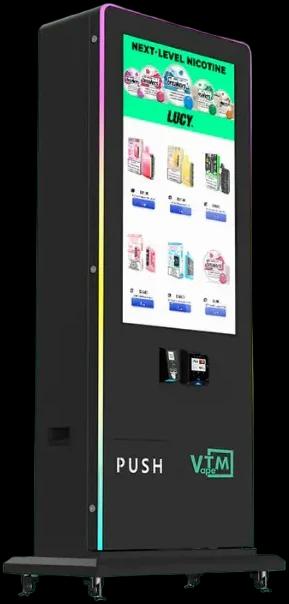
Vape machines are built for age-restricted products, in wall-mounted and freestanding models. VTM Vending's Mini Wall is the compact wall model, and the freestanding Slim Tower 2.0 adds a touchscreen. Rules for selling these products through a machine vary, so check federal, state and local requirements before you place one.
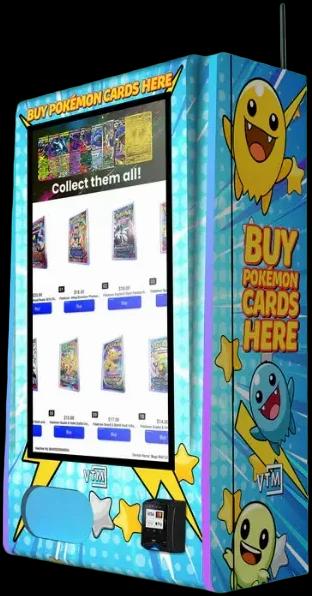
Trading card machines sell booster packs and collectible cards from a small footprint in high-traffic spots. The VTM Mini Wall TCG mounts on a wall, and the floor-standing Slim Tower 2.0 TCG holds more. Card fans are loyal buyers, which makes this a niche worth a look where they already gather.
Best for: bars, smoke shops, game stores, malls, arcades
What should you check before you buy?
- Start with the location, not the machine. Visit at the busiest hour, count who walks by, and ask what they wish the building sold.
- Match payment to the crowd. Most smart machines in the catalog are cashless; if the location needs cash, look at models like the PicoMarket+ and MM6+.
- Measure before you order. Check the doorway and the spot, confirm an outlet that matches the spec sheet, and confirm a water line for a plumbed brewer.
- Upgrade before you replace. A cashless reader over an old bill acceptor can keep a working spiral machine on the route.
- Plan how you'll read the sales. Connected machines report what sells, so you restock what moves and swap out what doesn't.
Your move this week
- Walk your target location at its busiest hour and write down whether the menu needs ambient, chilled or frozen space.
- Ask the manager how people there pay and whether the crowd is the same faces every day. That answer picks between a lock-and-tap cooler and a camera cooler.
- Run the smart cooler cost comparison for the cooler sizes you're considering.
- Shortlist two machines from the chart above, then measure the spot, the doorway and the nearest outlet against their spec sheets.
Frequently asked questions
What is an AI vending machine?
An AI vending machine is a cooler or cabinet that uses cameras and AI to see what a customer takes. The customer taps a card or phone to open the door, takes items, and is charged when the door closes. With no spirals, it can sell almost anything that fits on a shelf.
Do smart coolers take cash?
Most smart coolers are cashless and take card and phone payments. If your location needs to take cash, some kiosks accept it, such as the 365 PicoMarket+ and the MM6+ Kiosk. Ask the location how people pay before you order, since a cashless machine in a cash-heavy spot will sit idle.
Can I add card payments to an old vending machine?
Yes. A cashless reader such as the 365 Payplus mounts over the existing bill acceptor and adds card and phone payments without replacing the machine. That makes upgrading a working spiral machine a sensible first step before you buy a new one, especially when the location is already happy with it.
What is the cheapest type of vending machine to start with?
Coffee brewers, grab-and-go kiosks and lock-and-tap coolers are the lowest-cost ways to start. For a stand-alone machine that sells drinks and snacks, a compact AI smart cooler is a common first purchase. Check each machine's page in the VendHub catalog for its listed price before you compare.
How is a micro market different from a vending machine?
A vending machine holds a few dozen items behind glass or a door. A micro market is open shelves and coolers with a self-checkout kiosk where customers scan and pay, so one location can carry hundreds of items. Markets suit large break rooms with a steady daily headcount.
Keep reading
 Vape Vending Machine Placement: Put It Where Staff Check ID, and Pass on Open-Door Stores
 Specialty Vending Machines: Pick the One Your Location's Foot Traffic Already Wants
 Pop Machines for Sale: Let the Location Pick Between Snack, Drink and Combo
 How to Choose a Self Checkout Kiosk: Let Security and Floor Space Decide Before the Screen Does