How Much Are Vending Machines? Let the Location Set Your Budget Before the Catalog Does
How much are vending machines? The price depends on four things: the format, whether it keeps product cold or frozen, the payment hardware, and how much it holds. Countertop units are the simplest and cheapest place to start. Smart coolers, frozen machines and micro markets sit at the top because of their hardware and setup work. This guide is for new operators and route owners who want to know what they are paying for before they spend it.
By Mike Hoffmann, Founder · 8 min read
Browse the machine catalog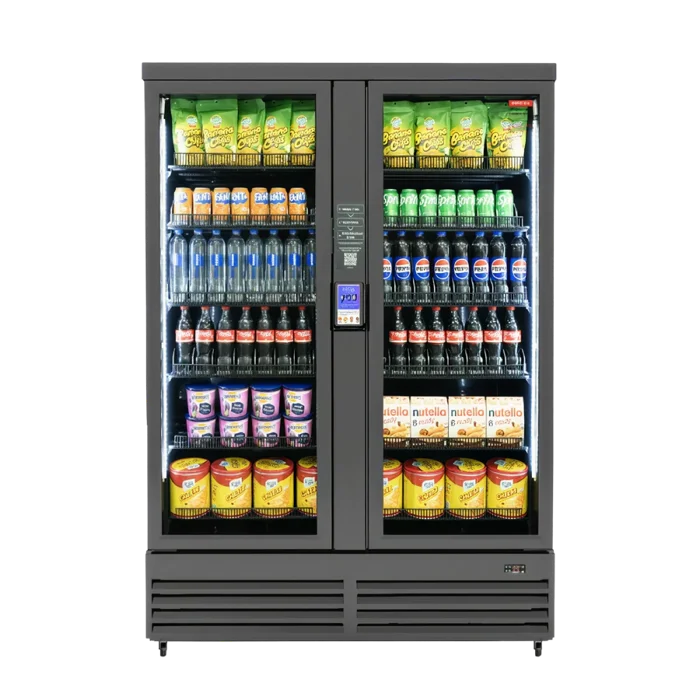
On this page (10 sections)
- How much are vending machines when you buy new?
- What makes one vending machine cost more than another?
- Which format fits the location, and what does each one cost you in tradeoffs?
- Are smart coolers and micro markets priced differently from spiral machines?
- Should you buy used or refurbished to save money?
- Can you finance a vending machine instead of paying up front?
- What costs come after you buy the machine?
- Is buying a route cheaper than buying machines?
- Your move this week
- Frequently asked questions
How much are vending machines when you buy new?
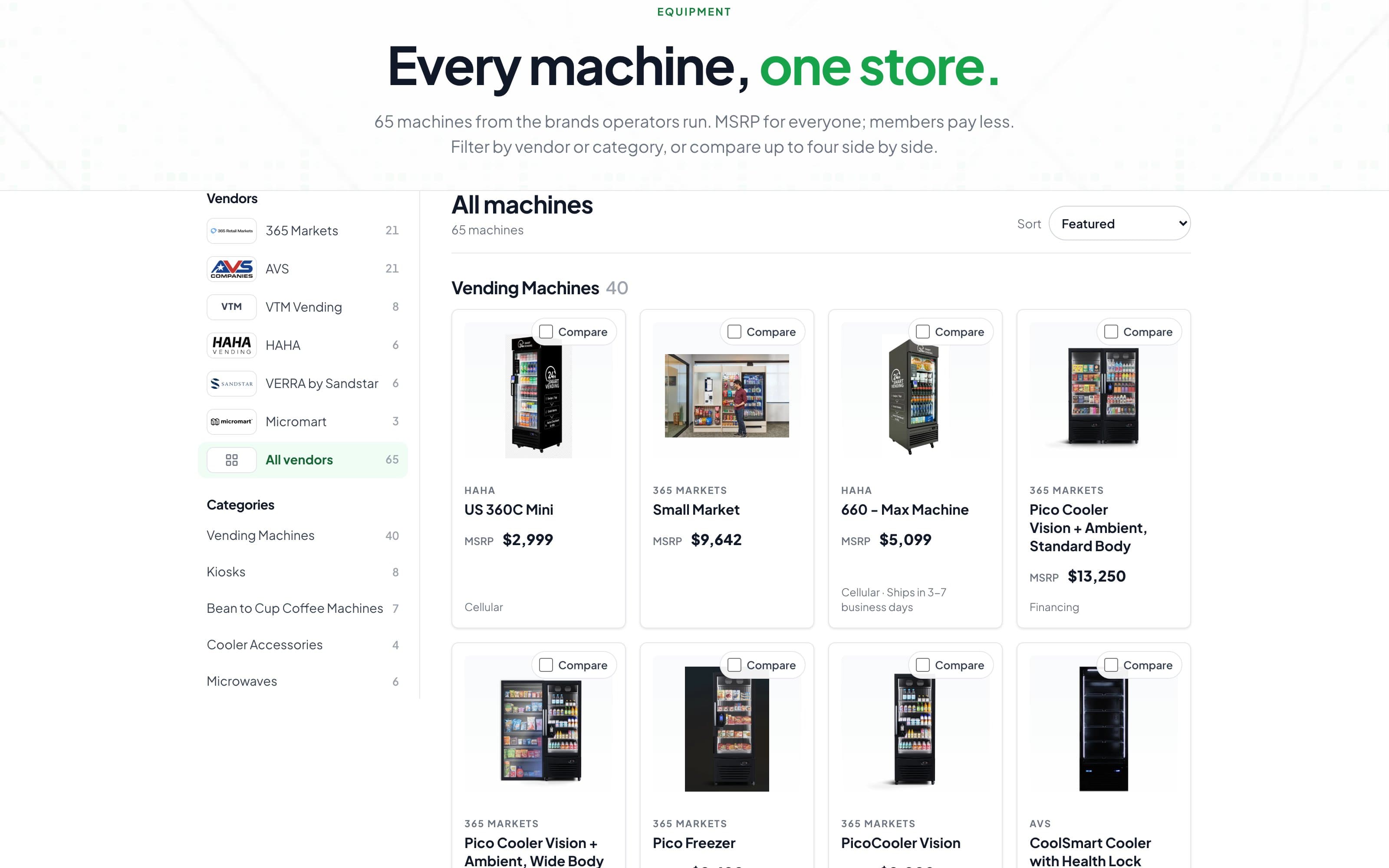
A new machine costs whatever its listed price says, and that price follows the format and features you pick. You don't need to request a quote to see it. Every machine in the VendHub catalog shows its price on the listing.
Start in the Equipment catalog, where each vending machine and smart cooler shows its MSRP. Filter to the format your location needs, then read the listing for capacity, warranty and payment hardware. Those details explain most of the gap between two machines that look alike in a photo.
VendHub sells new machines only. You won't find used or refurbished stock in the catalog, so every listing comes with its maker's specs and warranty. If you want to see the whole buying flow before you commit, the platform shows it screen by screen.
Don't open the catalog first. Find out what the location wants, how much room it has, and whether it has a good outlet. A machine bought before you have a location often turns out to be the wrong one.
What makes one vending machine cost more than another?
Refrigeration, capacity and payment hardware push the price up more than anything else. Touchscreens, cameras and remote sales reporting add more on top. Know which of these the location actually needs and you won't pay for the rest.
A basic glass-front spiral snack machine has no cooling and fairly simple parts. A drink machine adds refrigeration and a delivery system that keeps bottles and cans from dropping too hard. A frozen machine adds a freezer and specialty delivery, so it lands at the high end.
Payment hardware matters at every price point. A machine that only takes cash will miss sales at most locations today, so check for a card reader on every listing. Use Compare machines to put up to four machines side by side on price, capacity, warranty and specs.
| Format | What drives the price | Best fit |
|---|---|---|
| Countertop machine | Small footprint, simple hardware | Small offices, salons, waiting rooms |
| Snack machine | Spiral count, capacity, card reader | Offices, schools, retail back rooms |
| Cold drink machine | Refrigeration, delivery mechanism | Warehouses, gyms, semi-outdoor spots |
| Combo machine | Two zones in one cabinet, refrigeration | Sites with room for one machine |
| Frozen food machine | Freezer, specialty delivery | Hospitals, campuses, overnight shifts |
| Smart cooler | Lock, cameras or sensors, screen | Breakrooms, apartment lobbies, coworking spaces |
| Micro market | Kiosk, shelving, coolers, fit-out | Large offices, plants, distribution centers |
Read the table by the last column first. If the location is a small waiting room, the top row is where your budget belongs. If it is a large employer asking for a full food option, start from the bottom row.
Which format fits the location, and what does each one cost you in tradeoffs?
The cheapest format that serves the location is usually the right first buy. Every step up in price brings more capacity or more product types, along with more work to keep it running.
Countertop machines sit on a table or counter. They suit spots with little foot traffic or no floor space. They hold less, so a busy site will outgrow one quickly.
Snack machines are still the main machine on most routes. They handle chips, candy, pastries and other shelf-stable items, and they work in almost any indoor location. Price rises with the number of spirals and the payment hardware.
Cold drink machines fit places where people do physical work or spend time outside. They need a reliable outlet and room for airflow behind the cabinet. Confirm both with the property manager before you order.
Combo machines put snacks and cold drinks in one cabinet. They work when a location has room for one machine but wants both. Each side holds less than a dedicated machine, so a busy site may need restocking more often.
Frozen food machines serve locations where people need food at odd hours and the cafeteria is closed. They take more care than other formats. A power outage or a failed compressor can ruin a full load of stock.
Are smart coolers and micro markets priced differently from spiral machines?
Yes. A smart cooler or a micro market costs more because of its hardware, and the cost of owning one keeps going after you buy it. Budget for the full time you will run it, not only the purchase.
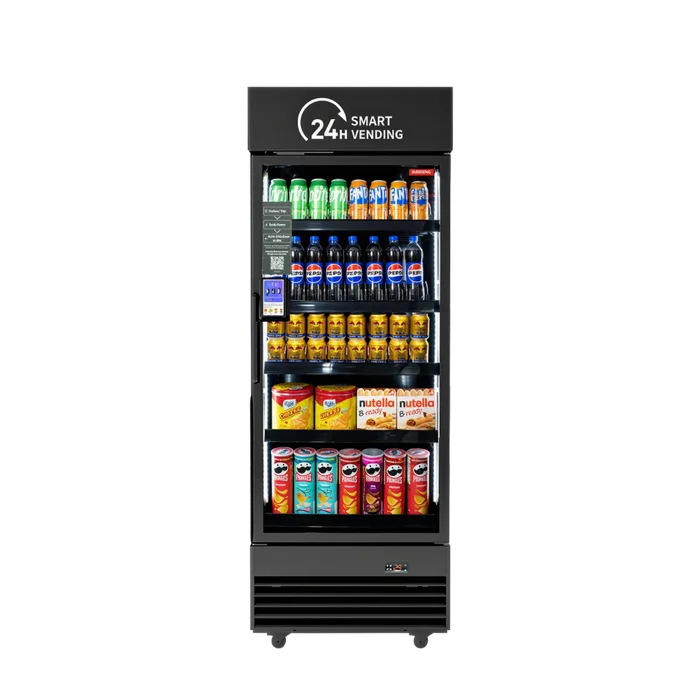
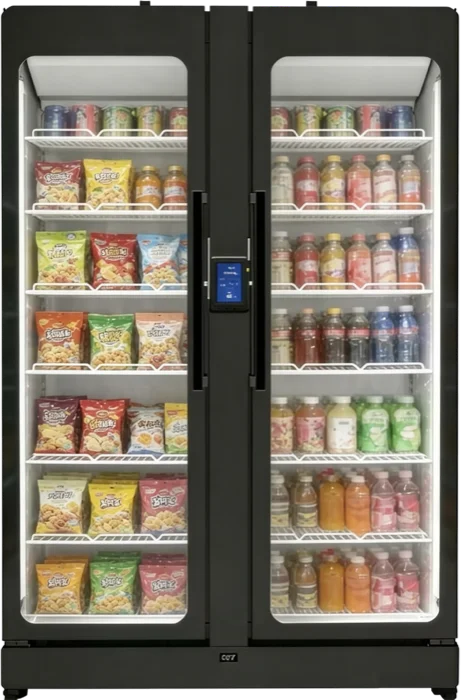
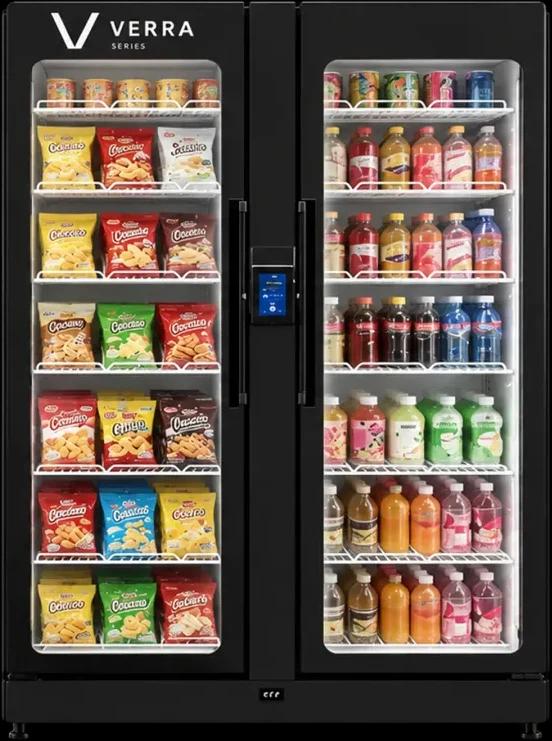
A smart cooler is a glass-door fridge that opens with a card or phone tap. The customer takes what they want, and the cooler charges for what was removed. It has no spirals, so it can sell fresh food, salads and odd-sized items a spiral machine cannot. The lock, the cameras or sensors and the screen all add to the price.
Run the smart cooler cost comparison to see what one costs to own over one to five years. That view is more useful than the sticker price when you weigh a cooler against a spiral machine. The screen can also earn money: VendMedia pays operators for ads shown on machines with a screen, including AI machines, micro markets and Vera machines.
A micro market is an open self-checkout store with shelves, coolers and a payment kiosk, usually in a breakroom. It carries the widest product range of any unattended format. It is also the largest setup job, since you are fitting out a room instead of placing one machine.
Micro markets suit large employers with a steady, trusted crowd. They are a poor fit for public spaces where theft is hard to control. If the location can't be trusted with open shelves, a locked cooler or a spiral machine is the safer buy.
Should you buy used or refurbished to save money?
It can lower your upfront cost, but you take on the machine's age and condition. VendHub sells new machines only, so a used or refurbished unit has to come from somewhere else. Judge it on what was fixed and what is still under warranty, not on the listing photo.
A refurbished machine is a used unit that has been cleaned, repaired and often fitted with newer payment hardware. Ask the seller what was replaced and whether a card reader is included. Then ask what warranty comes with it, if any.
Before you decide, price the same format new so you know what you are giving up for the lower number. Our post on used, refurbished or new machines walks through the checks in more detail.
Can you finance a vending machine instead of paying up front?
Yes, through a financing partner. VendHub doesn't lend money itself. Members get equipment financing inside the platform through the partner APPROVE.
Financing spreads the cost of a machine over time, which helps when you are placing more than one. Talk terms over with the partner directly and read them before you sign. Match the payment to how sure you are that the location will hold.
Buying through the platform also helps with the price itself. VendHub members get discounted member pricing on equipment and supplies, and that saving builds up as you add machines. The pricing page lists what membership includes.
What costs come after you buy the machine?
Stock, delivery, payment processing, any commission the location asks for, and your time on the route. These keep coming in every month the machine runs. Plan for them before you sign the location.
The location profit calculator shows what a stop earns after rent, spoilage, commission, fees and time. Run it before you place a machine, so you can turn down a stop that costs more in drive time than it brings in. For stock, the free tools also include a wholesale delivered-cost checker that compares suppliers on delivered cost per item.
Once machines are running, keep their numbers in one place. VendLytics connects your machine data and tracks each machine's sales and revenue. It also produces a Location Statement and a Revenue Share report for each location, so you have the commission numbers to send every location manager.
Is buying a route cheaper than buying machines?
Sometimes. A route gives you machines and the locations they already sit in, so you skip the prospecting. You also inherit the machines' condition and the location contracts as they stand.
That trade makes sense when you want placements on day one or when you are moving into a new city. Check every stop and every machine before you agree to a price. Ask to see the contracts and how long each location has left on its term.
Browse vending routes for sale along with the list of what to check before you buy one. Compare what you would pay for the route with buying new machines for locations you find yourself.
Your move this week
- Find the location before the machine. Enter a ZIP code and business type in the vending location finder to get five real nearby businesses to approach.
- Visit one site and write down three things: floor space, the nearest outlet, and whether people there want snacks, drinks, fresh food or all three.
- Pick the format from the table above, then shortlist two or three machines in that format and compare them on price, capacity and warranty.
- Run the numbers for that stop with the location profit calculator, using the commission the location asked for.
- If you are weighing a smart cooler, run its one-to-five-year cost of ownership before you talk to the property manager.
Frequently asked questions
Where can I see vending machine prices without asking for a quote?
The VendHub Equipment catalog shows a price on every vending machine and smart cooler listing. Filter to the format your location needs and read the specs on each listing. Then use Compare machines to line up to four options on price, capacity, warranty and specs before you choose one to buy.
Should I buy a machine before I have a location?
Usually not. The location decides the format: a breakroom may want a smart cooler, while a warehouse may want a drink machine. Find real nearby businesses first, land the placement, then buy the machine that fits the space, the outlet and what people there want to buy.
Does VendHub sell used or refurbished vending machines?
No. VendHub sells new machines only, so every listing comes with the maker's specs and warranty. If you look at a used or refurbished unit elsewhere, ask what was replaced, whether it has a card reader and what warranty comes with it. Then compare it with the same format new.
Does VendHub offer financing on machines?
VendHub does not lend money itself. Members get in-platform equipment financing through the partner APPROVE, which spreads a machine's cost over time. Review the terms with the partner directly before you sign, and match the commitment to how confident you are in the location you are placing the machine in.
Do I need a card reader on my machine?
In most locations, yes. A machine that only takes cash will miss sales from customers who don't carry it. Check the payment hardware on every listing before you buy, and confirm whether a card reader is included or has to be added separately, since that changes your total cost.
Keep reading
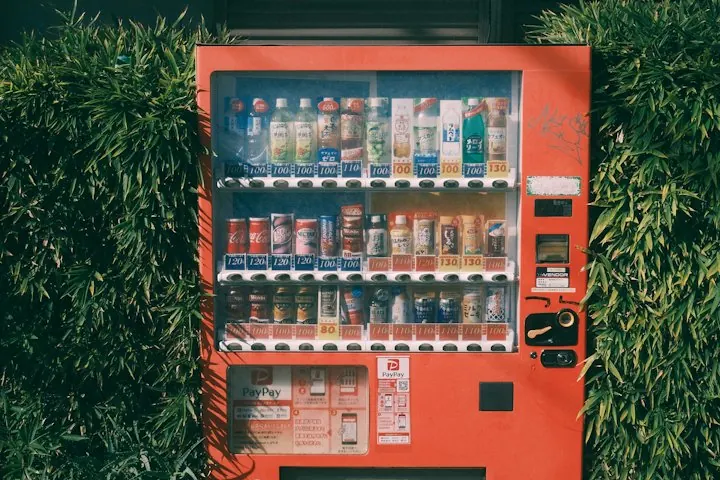 Vending Businesses for Sale: Buy the Locations, Not the Machine Count
 Used Vending Machines for Sale: Buy Used Only When You Can Watch It Run
 Vending Machine License: Why No Single Office Covers It, and the Paperwork Each Placement Needs
 Vending Machine Rental, Leasing and Financing: Match the Payment to How Sure You Are About the Location