Vending Machine Rental, Leasing and Financing: Match the Payment to How Sure You Are About the Location
Vending machine rental, leasing and financing all let you put a machine in a location without paying the full price on day one. Rent or lease when the location is untested and you may need to walk away. Finance or buy when the spot has proven it sells and you want to own the machine. This guide is for operators placing a first machine or adding machines to a growing route.
By Mike Hoffmann, Founder · 8 min read
Browse the machine catalog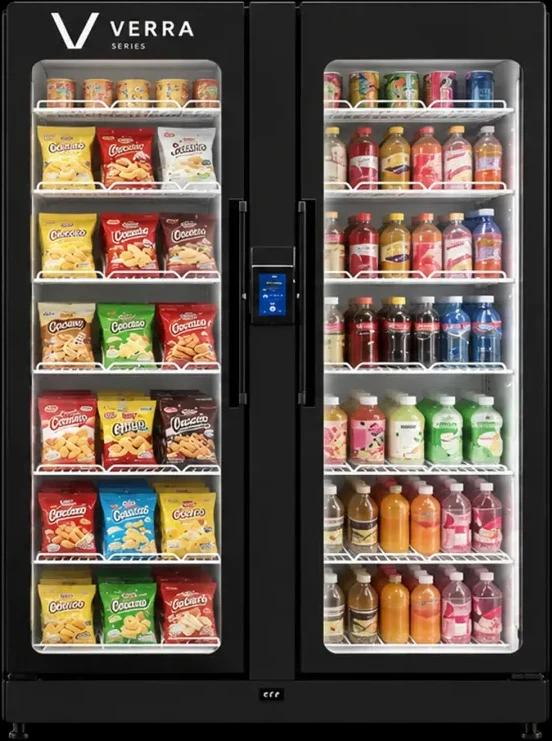
On this page (9 sections)
- How do vending machine rental, leasing and financing differ?
- Should you rent or buy a machine for an unproven location?
- What should you check in a rent-to-own or lease contract?
- When does an equipment loan or finance lease make sense?
- Is buying a used machine cheaper than financing a new one?
- Can you buy a route that already has machines?
- How do you know a financed machine is covering its payment?
- Your move this week
- Frequently asked questions
This is general information, not legal advice; check with your state and local agencies or an attorney.
How do vending machine rental, leasing and financing differ?
The difference comes down to who owns the machine when the contract ends. Rentals and operating leases leave it with someone else. Rent-to-own, finance leases and loans end with the machine in your name.
Three things decide which one fits. The first is ownership: does the machine become yours, stay with the other party, or depend on a buyout at the end? The second is cash: how much you pay up front compared with what you owe every month, whether or not the location sells.
The third is flexibility. A new location is a guess until it has a few months of sales behind it. The more locked-in your payment is, the more sure you need to be about the spot before you sign.
| Option | Who owns the machine at the end | Cash up front | Fits best when |
|---|---|---|---|
| Short-term rental | The rental company | Lowest | You're testing a location or an event |
| Rent-to-own | You, once every payment is made | Low | You want ownership without a big check |
| Operating lease | The lessor | Low | You want newer machines every few years |
| Finance lease | You, usually after a buyout | Low to medium | The placement is long-term and trusted |
| Equipment loan | You, with the lender holding a lien | Medium | You have a borrowing history and want to own |
| Buying new outright | You | Highest | You have cash and a proven location |
| Buying a route with machines | You | Highest | You want sales history from day one |
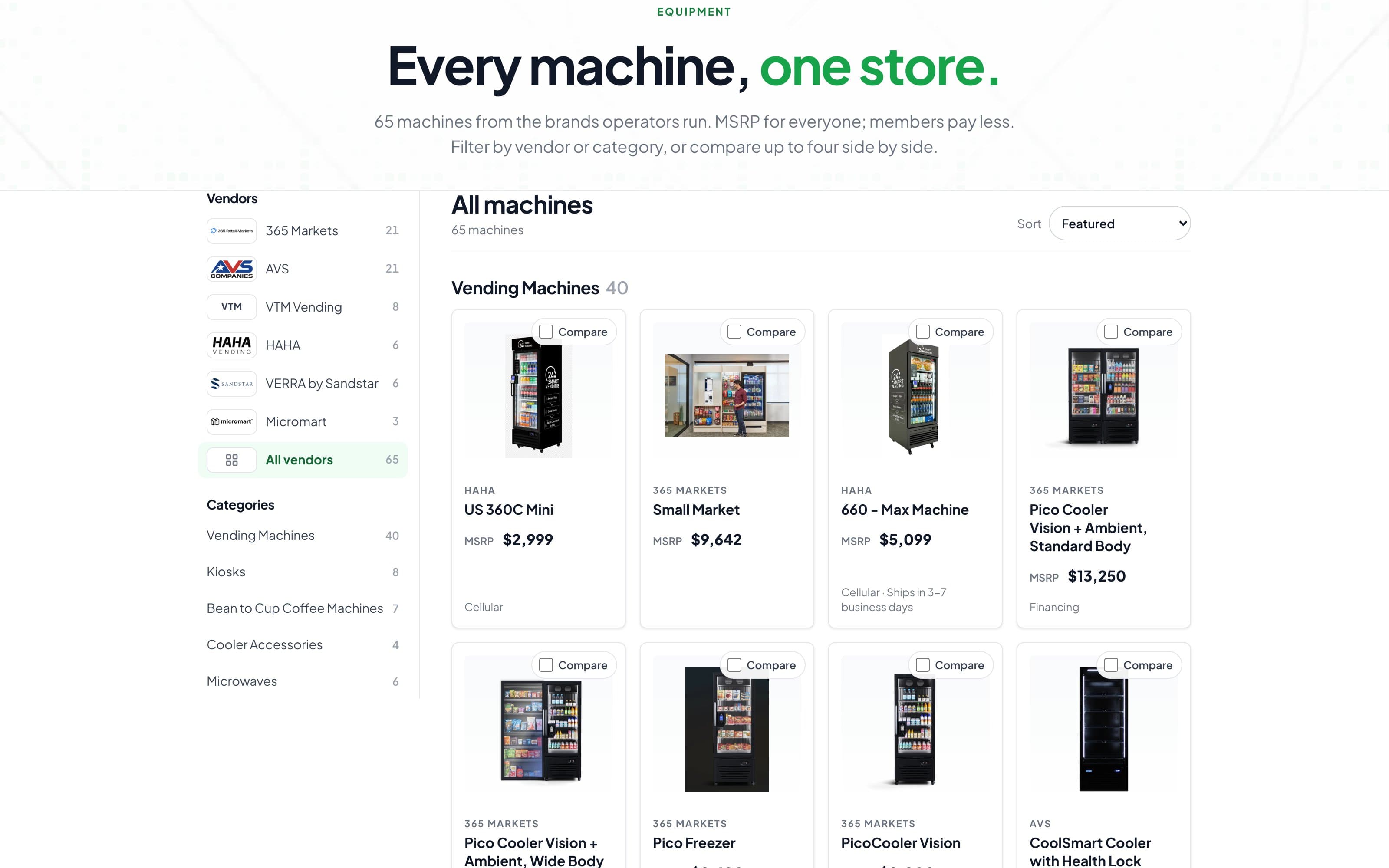
Before you compare any offer, know what the machine itself lists for. Every machine in the Equipment catalog shows its price, which gives you a fixed number to hold each rental, lease or loan against.
Should you rent or buy a machine for an unproven location?
Rent, or sign a rent-to-own deal you can exit early, when the location hasn't proven itself. Buy once the spot has a sales record you trust.
A short-term rental means you pay a recurring fee to use a machine and return it when the term ends. You put very little cash in up front, and some rental agreements include repairs. You never own the machine, so every payment is a cost of testing the spot.
That trade is worth it when you honestly don't know whether the location will sell. Run the spot through the location profit calculator to see what it earns after rent, spoilage, commission, fees and your time. If it can't carry a rental fee, it can't carry a loan payment either.
Many operators follow the same path. They rent or lease to test a location, then buy a machine once the location has proven itself. The rental fee is the price of finding out before committing years of payments.
What should you check in a rent-to-own or lease contract?
Check the total you'll pay, the exit terms and what happens at the end. Two sellers can both call a deal "rent-to-own" and mean two different arrangements, so the paperwork matters more than the name.
With rent-to-own, you pay monthly and the machine becomes yours after the last payment. Ask what all the payments add up to, whether a missed payment resets anything, and whether you can buy the machine out early. Put that total next to the listed price for the same model.
An operating lease works differently. You use the machine for a set term and hand it back, and the lessor keeps ownership. Payments tend to stay steady, and some operators use these leases to switch to newer machines each cycle, but you build no equity.
Read these terms on any rental or lease before you sign:
- Minimum term: how long you're committed, and the fee to end early.
- Location loss: what happens if the location closes or asks you to remove the machine.
- Moving and repairs: who pays to move the machine and who pays to fix it.
- Return condition: what counts as damage, since wear, missing parts or a dented cabinet can cost you at return.
- Buyout: whether it's a fixed amount or "fair market value."
If you have broader questions about support, financing, suppliers or contracts, the VendHub FAQ covers the ones operators ask most.
When does an equipment loan or finance lease make sense?
Use one when the location has proven itself, you want to own the machine, and you don't want to spend all your cash at once. Both end with the machine in your name.
A finance lease, sometimes called a capital lease, is built so you keep the machine. You make payments for the term, then buy the machine for a set buyout amount. It works like a loan with lease paperwork, so find out whether the buyout is fixed, because a fixed amount is easier to plan around.
An equipment loan lets you own the machine from day one, with the lender usually holding a lien until it's paid off. The machine secures the loan, so approval can be easier than for an unsecured loan. Ask about the term, any prepayment penalty, and what happens to the lien if you sell the machine or the route.
Both carry the same risk. You owe the payment whether the machine sells well or not. Use Compare machines to check the model fits the location's space and product mix before you commit years of payments to it.
Some growing operators use a revolving business loan instead. They draw money as new locations sign rather than taking a new loan each time. These often have variable rates, and it's easy to draw too much, so tie each draw to a signed location.
VendHub doesn't lend money directly. Members get in-platform equipment financing through VendHub's partner APPROVE, and they get member pricing on equipment and supplies, which adds up over time when you're buying several machines.
Is buying a used machine cheaper than financing a new one?
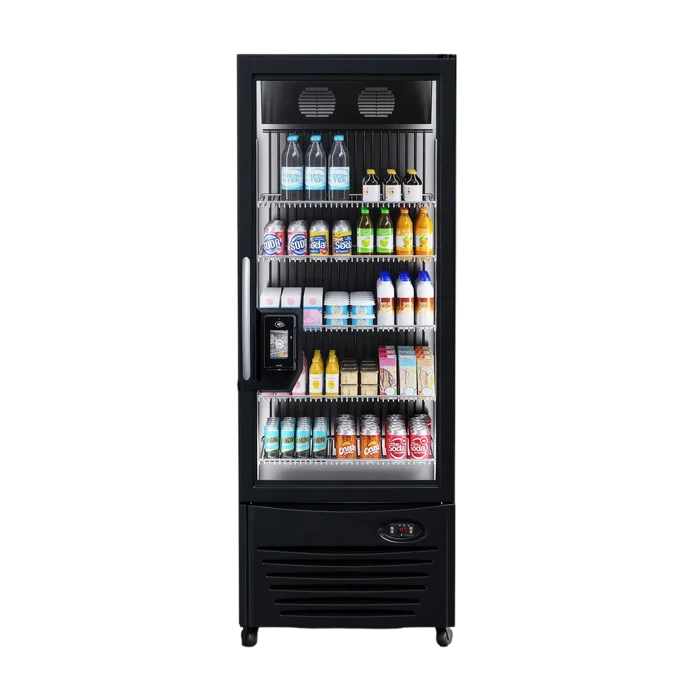
A used machine costs less up front and you own it outright. Whether it ends up cheaper depends on its condition and the upgrades it needs.
For a simple snack or drink placement, a well-kept used machine can do the job. The risk is what you can't see. Check the refrigeration, the coin and bill mechanisms, the card reader, and whether parts are still available for that model.
Before you call a used machine a bargain, count the upgrades you'll need, such as a cashless reader. A new machine comes with a warranty from the start. VendHub sells new machines only, and Used Vending Machines: Used, Refurbished or New walks through how to weigh the two.
Paying cash for a new machine means no monthly payment and you never owe anyone for it. It also ties up the most cash. Make sure you still have money for stock, a card reader and the first few restocks.
Can you buy a route that already has machines?
Yes. When you buy an existing route, the locations, machines and sales history come together, so you start with machines that are already placed and selling.
This is the most cash up front of any option, but some sellers will finance part of the price themselves. It's worth asking. A seller who won't carry any of the note may be telling you something about the route.
Check every machine's age and condition, confirm the location agreements transfer to you, and ask for real sales records. The vending routes for sale page lists routes along with what to check before you buy one.
How do you know a financed machine is covering its payment?
Track its sales every week against what you owe each month. Your payment stays the same while your sales move, so you want to spot a weak location early.
Connect your machines to VendLytics and every machine's sales and revenue sit in one place. It also produces a Location Statement and a Revenue Share report for each location, which gives you the commission numbers to send your hosts.
Watch for a location that runs short of its payment for several weeks in a row. That's the moment to read your exit terms again, move the machine to a better spot, or change the product mix. Waiting until the end of a lease term costs you every month in between.
Your move this week
- Price the spot before you price the payment. Put your target location into the location profit calculator and write down what it can afford each month.
- Get the total on every offer. For each rental, lease or loan quote, add every payment plus any buyout and put it next to the machine's listed price.
- Ask the five contract questions. Minimum term, location loss, moving and repairs, return condition and buyout. Get each answer in writing.
- Show the host the machine. Drop the model into a photo of the breakroom with See it in my space and send the mockup to the property manager before you sign anything.
- Set aside stock money. An empty machine sells nothing, so reserve cash for the first orders before you commit to a payment.
Frequently asked questions
What happens at the end of a vending machine lease?
It depends on the lease type. With an operating lease, you usually return the machine or sign a new lease. With a finance lease, you usually pay the agreed buyout amount and keep the machine. Confirm the buyout amount and the return conditions before you sign, because both change your total cost over the term.
Can I return a rented machine if the location closes?
Only if your contract allows it. Some rentals and leases let you end early for a fee, while others hold you to the full term. Before signing, get in writing what happens if the location closes or asks you to remove the machine, and who pays to move it to a new spot.
Does VendHub lend money for vending machines?
VendHub does not lend directly. Members get in-platform equipment financing through VendHub's partner APPROVE, so you can apply while you shop for a machine. VendHub sells new machines only, and every machine in the catalog shows its price, so you know the number you're financing before you apply.
Where can I see machine prices before choosing how to pay?
The VendHub Equipment catalog shows a price on every vending machine and smart cooler, and you can compare up to four models side by side. For smart coolers, the cost comparison tool shows what one costs to own over one to five years. Use that listed price to judge any rental, lease or loan offer.
Should someone review a lease or financing contract before I sign?
This is general information, not legal advice; check with your state and local agencies or an attorney. Lease and loan terms differ by provider, and rules differ by state. Having an attorney or accountant read the exit terms, buyout clause and lien details before you sign is cheaper than finding a problem after.
Keep reading
 Vending Businesses for Sale: Buy the Locations, Not the Machine Count
 Used Vending Machines for Sale: Buy Used Only When You Can Watch It Run
 How Much Are Vending Machines? Let the Location Set Your Budget Before the Catalog Does
 Vending Machine License: Why No Single Office Covers It, and the Paperwork Each Placement Needs