Vending Contracts and Location Commissions
You found a good location. The office manager likes the idea, the breakroom has an open wall, and now they want to talk terms. That is where a lot of operators stall, because vending contracts mix two separate decisions: how the location gets paid, and what each side is on the hook for.
By Mike Hoffmann, Founder · 8 min read
See VendScout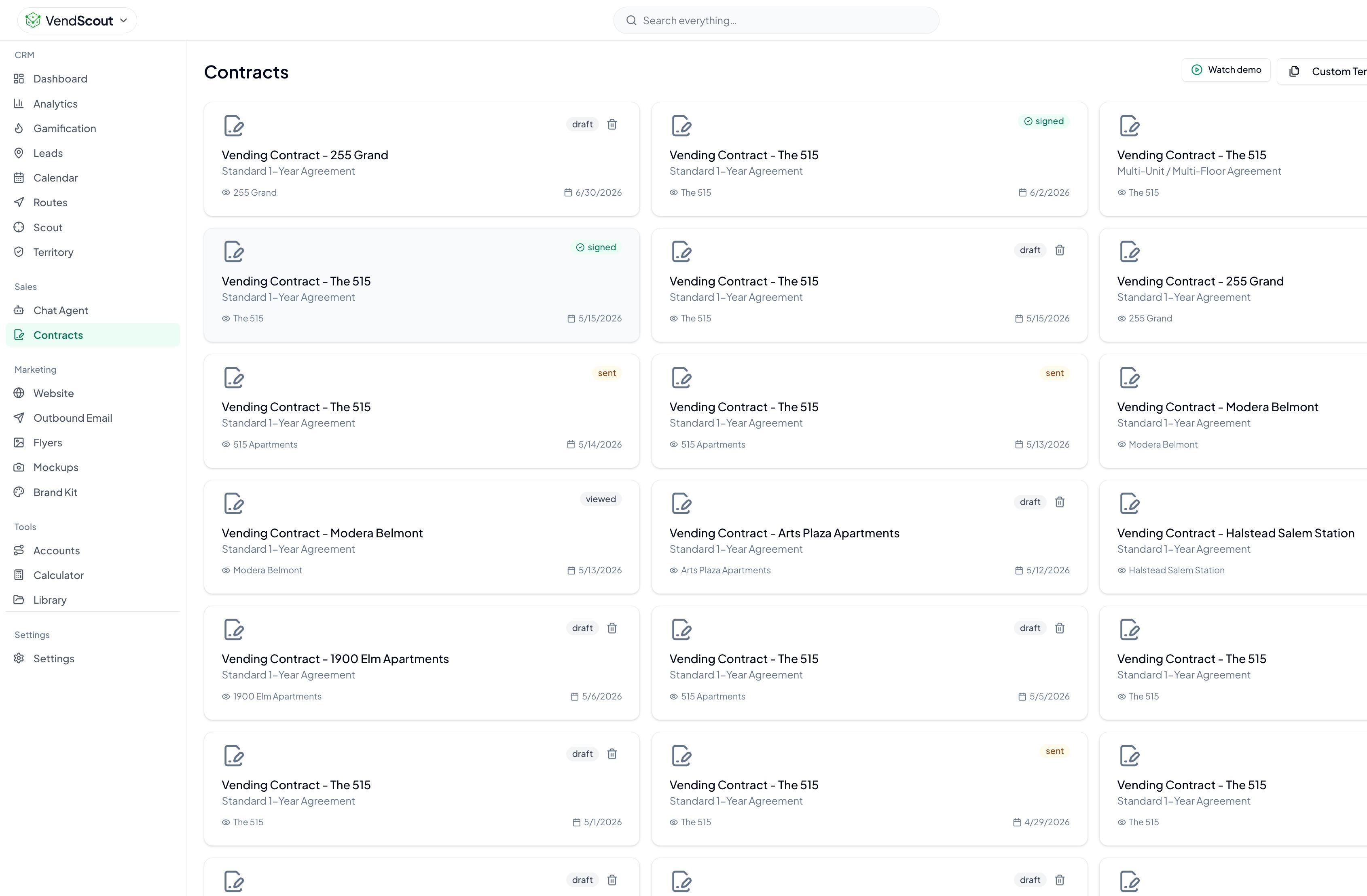
On this page (7 sections)
One location asks for a share of sales. Another wants a flat fee. A third just wants snacks and nothing else. The paperwork can run one page or ten, and the clause that hurts you is rarely the one about money.
This guide walks through the commission structures you will be offered, the clauses that matter most, and how to check whether a deal still works for your route before you sign.
Why vending contracts matter
A location agreement decides three things: what you pay the location, how long you are committed, and how either side can walk away. Get the payment right and the term wrong, and you can end up locked into a spot that stopped selling. Get the term right and the payment wrong, and every restock trip loses ground.
The fourth thing it decides is control. Who picks the products, who sets the restock schedule, and who owns the machine if the relationship ends. Those clauses shape your day-to-day work more than the commission line does.

Contract terms chart: from payment structure to exit clauses
| Term | What it sets | Where it helps you | What to check |
|---|---|---|---|
| Percentage-of-sales commission | Location gets a share of sales | Cost rises and falls with sales | Gross or net basis |
| Tiered commission | Share changes at sales thresholds | Rewards busy locations fairly | How thresholds are measured |
| Flat monthly fee | Fixed payment each month | Easy to budget | Slow months still cost the same |
| No-commission placement | Location takes no payment | Keeps more per sale | Expectations on service |
| Gross or net sales basis | What the commission is calculated on | Net protects your margin | Which fees come out first |
| Exclusivity clause | Whether others can place machines | Protects your sales | Scope of the exclusivity |
| Term length and renewal | How long the deal runs | Time to earn back setup | Automatic renewal language |
| Termination and notice | How either side exits | A clear way out | Notice period and penalties |
| Service and restock terms | Your service obligations | Sets clear expectations | Response times you can meet |
| Product selection approval | Who picks the products | Keeps the client happy | Room to swap slow sellers |
| Insurance and liability | Who covers damage and injury | Clear responsibility | Coverage the location requires |
| Equipment ownership and removal | Who owns the machine and how it leaves | Protects your asset | Access for pickup |
Quick picks: which contract terms should I push for?
- New location with unknown traffic: a modest percentage-of-sales commission, so your cost tracks real sales.
- Busy location that wants more: a tiered commission that pays them more only once sales clear a set level.
- Small office that just wants the convenience: a no-commission placement with clear service terms.
- Location asking for a fixed monthly payment: run it through a profit calculator first, using a slow month.
- Any deal: a termination clause with a reasonable notice period and a clear right to remove your equipment.
The most common contract terms and what they're best for
Percentage-of-sales commission
The location gets a share of what the machine sells. It is the most common structure because the cost moves with the location's performance. A slow month costs you less, and a strong month pays the host more.
The catch is the percentage itself and what it applies to. Before you agree, plug the numbers into the location profit calculator, which accounts for commission alongside rent, spoilage, fees and your time.
Best for: new locations, unknown traffic, office breakrooms
Tiered commission
A tiered deal pays the location one rate up to a sales level and a different rate above it. It suits hosts who expect high traffic and want to share in it. It also lets you keep a lower rate while a location is still proving itself.
Check how the tiers are measured: per month, per machine, or across every machine at the site. Your sales data needs to back up the tier calculation, and VendLytics shows sales for every connected machine in one view.
Best for: high-traffic sites, multi-machine locations, renegotiations
Flat monthly fee
Some locations want a fixed payment instead of a share. It is simple to budget and easy for the host to understand. If the location sells well, you keep everything above the fee.
The risk is the slow months, holidays and building closures where the fee stays the same. Model the worst month you can reasonably expect before you agree, and check the unattended retail guide if you are weighing a different format for the space.
Best for: proven high-traffic sites, hosts who want predictable income, transit and retail spots
No-commission placement
Many smaller sites take no payment at all. They want a machine for their staff or customers and see it as an amenity. Businesses can request this kind of setup through free vending placement, which matches them with a vetted local operator.
No commission does not mean no expectations. Hosts in these deals often care most about clean machines and fast restocks, so write down what service level you are promising.
Best for: small offices, gyms, light-traffic breakrooms
Gross or net sales basis
This clause decides what the commission is calculated on. Gross means total sales. Net means sales after certain costs, such as card processing fees or sales tax, come out first.
The difference adds up on every sale. Ask the location to name exactly which deductions apply, and use the location profit calculator to see both versions side by side.
Best for: every commission deal, card-heavy machines, renegotiations
Exclusivity clause
Exclusivity means no other operator can place machines at the site during your term. It protects your sales from a competing machine down the hall. Hosts will sometimes trade exclusivity for a slightly better commission.
Read the scope carefully. Does it cover all vending, only snacks and drinks, or only one floor? A clause that is too narrow protects very little.
Best for: large sites, multi-tenant buildings, long terms
Term length and renewal
The term sets how long the deal runs. A longer term gives you time to earn back what you spent placing the machine. A shorter term gives the host comfort that they are not stuck with you.
Watch for automatic renewal language and the window for cancelling it. If you are buying an existing route, the remaining terms on each location matter a lot, and vending routes for sale covers what to check before you buy.
Best for: new placements, route purchases, expensive equipment
Termination and notice
This clause says how either side ends the deal. Look for a notice period, the reasons either side can terminate, and whether there is any penalty. A fair clause works in both directions.

Make sure you can exit if sales fall off or the site changes, such as an office going mostly remote. The FAQ covers common questions on contracts.
Best for: every agreement, uncertain sites, short-term pilots
Service and restock terms
Some contracts spell out how often you restock and how fast you respond to a broken machine or a refund request. Clear terms prevent the most common complaint from hosts, which is an empty or broken machine.
Only agree to response times you can actually meet across your whole route. Tools in run my operation help you plan routes and see what each connected machine earns.
Best for: corporate offices, hospitals and clinics, sites with facilities managers
Product selection approval
Some hosts want a say in what goes in the machine. That can mean healthy options, no energy drinks, or a request list from staff. Agreeing to a starting lineup keeps the relationship smooth.
Keep the right to swap products that do not sell. Build your product list from national wholesale suppliers in the Pantry catalog, and look up item details in the vending UPC database.
Best for: schools, health-focused workplaces, hosts with staff input
Insurance and liability
Larger sites often require proof of insurance and name who is responsible for damage, theft or injury. Property managers may need a certificate before the machine goes in.
Find out what coverage the location requires early, before you order or move a machine. A deal can stall for weeks on paperwork that could have been handled up front.
Best for: property-managed buildings, corporate campuses, public facilities
Equipment ownership and removal
The contract should state that you own the machine and can retrieve it when the deal ends. It should also cover access: when you can come in, and what happens if the host is closed.
This clause protects your biggest asset. If you are still choosing equipment, compare machines side by side on price, capacity and warranty, and browse the full Equipment list.
Best for: every placement, high-value smart coolers, multi-machine sites
Tips for choosing contract terms
- Model the deal before you agree. Run the commission, fees and your time through the location profit calculator using a realistic slow month.
- Lead with a written proposal. The placement proposal generator gives the property or office manager something print-ready to react to.
- Show the host the machine in their space. The see it in my space tool drops a machine into a photo of the breakroom so the decision feels concrete.
- Get the calculation basis in writing. Gross or net, which fees, and how often you pay should all be spelled out.
- Keep a clear exit. A notice period and a right to remove your equipment matter more than a slightly better commission rate.
Running location contracts
Once a contract is signed, the work is keeping the numbers honest and the host happy. Connect your machines to VendLytics so commission reports come from real sales data, and check integrations for the machine systems it connects to. If you run smart coolers, VendMedia puts ads on idle screens and pays out to your account.
To keep the pipeline full, grow my route finds locations in any zip code and keeps every lead in one pipeline. VendScout adds ranked location leads with contracts, and the free vending location finder returns real nearby businesses for a ZIP code. Membership details are on pricing.
Frequently asked questions
Do all locations expect a commission?
No. Many small offices, gyms and light-traffic sites take no payment and treat the machine as an amenity for staff or customers. Larger or busier sites are more likely to ask for a percentage of sales or a flat fee. Ask early so you can model the deal before you commit equipment.
Should commission be paid on gross or net sales?
Net sales usually protects your margin, because fees like card processing come out before the commission is calculated. Whichever basis you agree to, write down exactly which deductions apply and how often you pay. Vague language here causes most commission disputes between operators and locations.
How long should a location agreement run?
Long enough to earn back what you spent placing the machine, and short enough that the host feels comfortable signing. Check for automatic renewal and the window to cancel it. Pair any long term with a fair termination clause so both sides can exit if the site changes.
What should I do if a location asks for a higher commission?
Run the new rate through a profit calculator with a slow month first. If it still works, consider a tiered structure that pays the higher rate only above a sales threshold. If it does not work, a clear termination clause lets you move the machine to a better site.
Can I sell a route that has location contracts in place?
Yes, and the contracts are part of what a buyer is paying for. Buyers will look at remaining terms, commission structures and exit clauses for each location. You can list a route free through sell your vending route, and it stays private until you pick a buyer.
This guide is general information, not legal, tax or financial advice. Rules differ by state, county and city, so confirm the details with your local authority, an accountant or a lawyer before you sign or file anything.